• Read
    • Labour
    • Business
    • Education
    • Field Notes
    • Law and Ethics
    • Technology
    • Policy
  • Work & learn
    • Journalism Jobs
    • Awards
    • Education Opportunities
    • Events
      • Submit an event
  • Projet J
    • Entrevue
    • Balado
    • Nouvelles
    • International
    • Liberté de presse
    • Archive
  • About Us
    • Editorial Board
    • Supporters
    • Contributor guidelines
Donate
J-Schools Canada
Facts & Frictions
Facebook Twitter X LinkedIn
J-Source
  • Read
    • Labour
    • Business
    • Education
    • Field Notes
    • Law and Ethics
    • Technology
    • Policy
  • Work & learn
    • Journalism Jobs
    • Awards
    • Education Opportunities
    • Events
      • Submit an event
  • Projet J
    • Entrevue
    • Balado
    • Nouvelles
    • International
    • Liberté de presse
    • Archive
  • About Us
    • Editorial Board
    • Supporters
    • Contributor guidelines
Search site...

Category / Read / Education

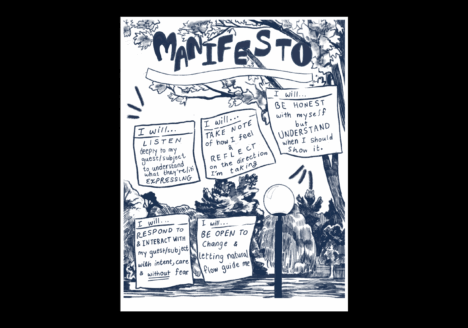
  • Journalism Manifesto illustration with cards reading “I will listen deeply to my guest/subject and understand what they’re expressing,” “I will take note is how I feel and reflect on the direction I’m taking,” “I will be honest with myself but understand when I should show it,” “I will respond and interact with my guest/subject with intent, care and without fear,” “I will be open to change and letting natural flow guide me.”

    Writing your own ‘Journalism Manifesto’ can be a powerful way to ground your practice on solid foundations

    An activity for educators and practicing journalists combines inclusivity and purpose Continue Reading Writing your own ‘Journalism Manifesto’ can be a powerful way to ground your practice on solid foundations

  • Row of books

    Knowing their news: Library workers as informants to journalism studies research

    Tyler W. S. Nagel identifies a new role for the public library: a knowledge base of community media information, and a new collaboration between libraries and library workers Continue Reading Knowing their news: Library workers as informants to journalism studies research

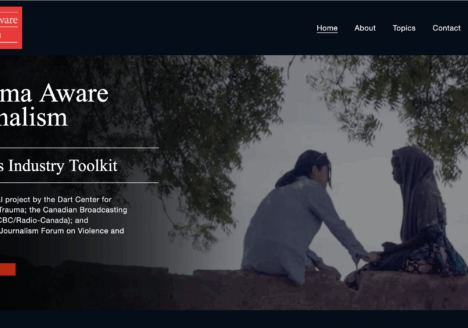
  • Online toolkit will aid newsrooms, j-schools navigate trauma

    Modules include interviewing children, covering vulnerable communities and how to protect workers’ mental health Continue Reading Online toolkit will aid newsrooms, j-schools navigate trauma

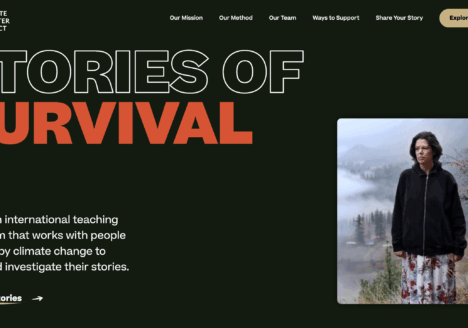
  • Climate Disaster Project: Stories of Survival, We are an international teaching newsroom that works with people affected by climate change to share an investigate their stories

    Amplifying the stories of survivors of climate-related disasters

    The Climate Disaster Project is challenging the rules of traditional journalism to focus on the human toll of climate change Continue Reading Amplifying the stories of survivors of climate-related disasters

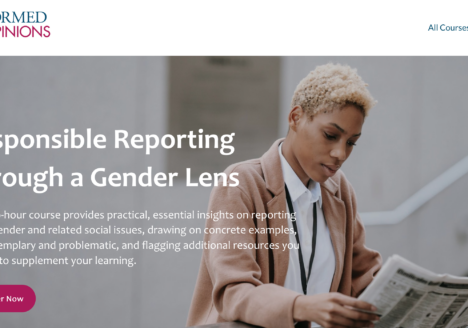
  • Informed Opinions gender guide

    New resource delivers practical tools for reporting through a gender lens 

    The free, online guide developed by Informed Opinions includes short lessons on intersectionality, trauma-informed reporting and reporting on people in situations of vulnerability  Continue Reading New resource delivers practical tools for reporting through a gender lens 

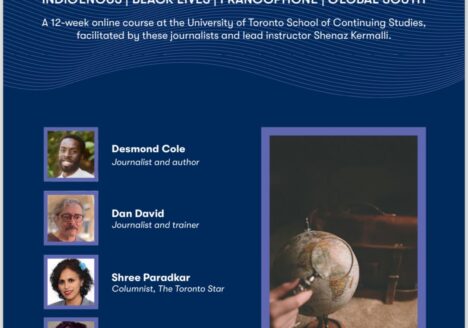
  • Decolonizing Journalism: Disrupting Euro-centric practices of newsgathering through four lenses: Indigenous, Black Lives, Francophone, Global South A 12-week online course at the University of Toronto School of Continuing Studies, facilitated by these journalists and lead instructor Shenaz Kermalli. Desmond Cole Journalist and author Dan David Journalist and trainer Shree Paradkar Columnist, The Toronto Star Lela Savié Publisher, La Converse U of T School of Continuing Studies

    New online course teaches lessons on decolonizing journalism

    Led by five journalists, the University of Toronto course focuses on challenging eurocentric narratives in Canadian media  Continue Reading New online course teaches lessons on decolonizing journalism

  • A map of all the locations in Canada that have passed press freedom resolutions at their city councils

    Classrooms advocate for press freedom

    Involving post-secondary students in petitioning civic organizations to recognize World Press Freedom Day drives home the importance of journalism for democracy. Continue Reading Classrooms advocate for press freedom

  • A newspaper on fire held in someone's hands

    Journalism students see an industry in crisis. It’s time to talk about it

    Not talking about the state of the industry is not an option for journalism educators. But how should they do it? Continue Reading Journalism students see an industry in crisis. It’s time to talk about it

  • Plumes of smoke rise into the sky from a forest fire

    What emerging journalists need to know about covering the climate crisis

    Accepting the scientific consensus, incorporating lived experiences and including traditional knowledge in climate-related stories can reinvigorate climate reporting and better serve audiences
    Continue Reading What emerging journalists need to know about covering the climate crisis

  • A group of students work in the library on a project

    Why journalism education needs the humanities

    Journalism schools still need to balance technical and critical-thinking skills and require broader study topics to prepare students for the complexity of issues they will go on to report Continue Reading Why journalism education needs the humanities

Previous
1234…1415
Next

Michener Scholarship

J-Source logo

J-Source, led by the journalism programs at Toronto Metropolitan University and Carleton University, is supported by the post-secondary journalism programs at member institutions of J-Schools Canada/Écoles-J Canada, the R. Howard Webster Foundation and a group of donors.

PRIVACY AND J-SOURCE

© Copyright 2024. All Rights Reserved

FacebookTwitter XLinkedIn

This site uses cookies to offer you a better browsing experience. Find out more on how we use cookies and how you can change your settings.