
Say you want to include the perspectives of young, less politically-engaged young men in your election coverage. Where would you find them?
A hockey game.
Because … why not? In newsrooms I’ve worked in, our first reaction when asked to find young voters is to head to the local university campus. But that’s not likely to surface perspectives from people in the trades, taking a gap year or following so many other paths. For that, we’ve got to be more creative.
This year, as Canada went into a high-stakes federal election, CBC newsrooms across Canada made a dedicated push to think through whose voices are sometimes less-heard in our election coverage, from Nunavummiut to low-turnout residents in the GTA. Then we got out and met people from those towns, cities and demographics to ask what mattered to them in the campaign and why.
It was a voluntary project, led by a handful of regional producers, which got picked up by newsrooms across the county. It expanded the scope of our coverage and helped us reflect our community back to itself in a powerful way.
It was also fun and insightful, a chance to try techniques and ideas we’d been hoping to pull out of our back pockets for years.
The basics
The project was called Canada Votes: What Matters. Our gathering techniques often looked like streeters, but we took more time and did full interviews with participants. These were gathered for any platform — video, audio and written digital — and it was local first. Newsrooms created stories about what they heard in specific locations, published locally and then shared these voices across the network.
We also asked people if we could include their name and phone number in a nationwide internal database, so that chase producers from the network shows would have an easier time including regional and less-heard perspectives in the national coverage.
In addition, voters who read or heard our stories were encouraged to share their own “what matters” with CBC through Ask CBC, an internal team that answers audience questions and shares insights from readers/listeners with the network teams.
To be honest, in some ways it feels funny to be writing about this topic. The idea is basically on-the-ground reporting — reporters heading out to the community and having open-ended conversations, then pulling the threads of the story. And being deliberately broad and inclusive about who we hear from.
Here are some lessons we learned that will help such a large-scale, voluntary project succeed.
Define the ‘who’ by the ‘where’
That genius hockey move is a credit to my colleagues in Ottawa. They’re the ones who decided young men were a demographic their team needed to be deliberate about reaching out to, and sent reporter Hallie Cotnam to an Ottawa Senators’ game. The result is a fun story that does a good job shedding light on concerns held by this demographic.
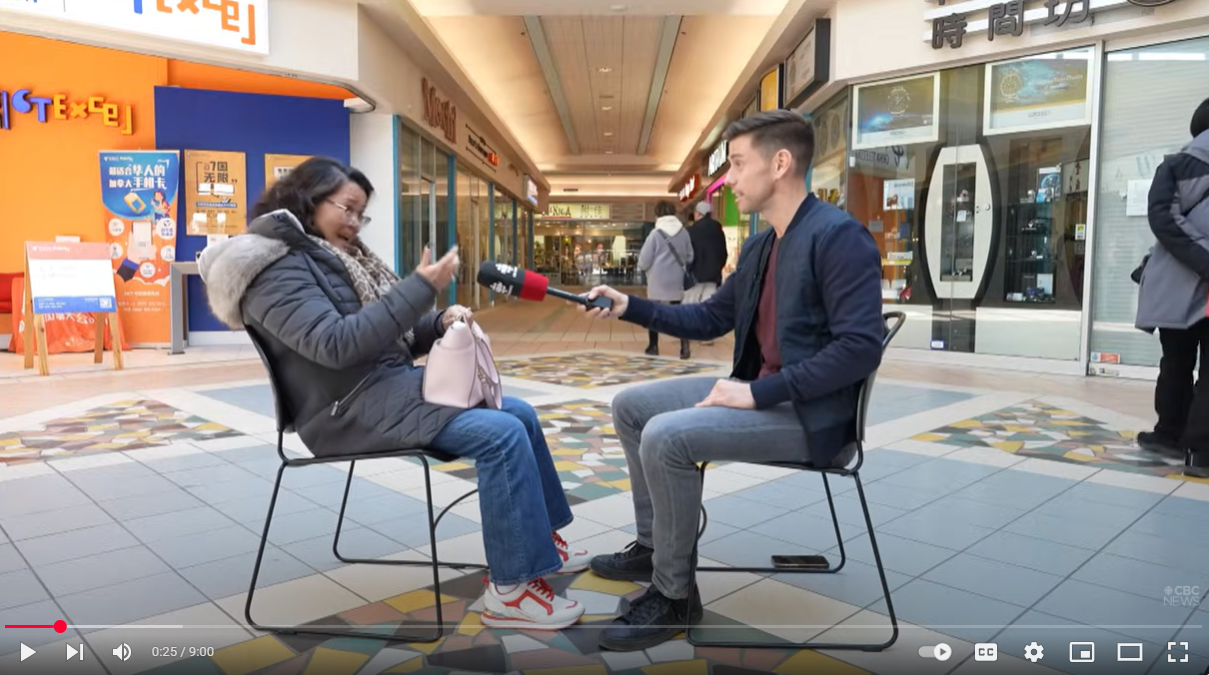
We had other pieces like this, too. I spent time at the Lethbridge Agricultural Expo, where I was able to talk with farmers from rural counties across southern Alberta. We had other reporters visit truck stops in Edmonton, set up in a mall in Chinatown in Toronto, an end-of-year celebration for Indigenous graduates in London, Ont., the airport in Inuvik, the parking lot outside a Pentecostal church in Calgary and the space under the clocktower in the Quesnel, B.C.‘s central square.
That clocktower is well-known for being a place where people who are struggling with drug addiction and homelessness often gather. But in her piece, Betsy Trumpener didn’t need to label anyone. The location itself framed the story. Then the voters were just voters. They had a unique view to share, like everyone else, and Trumpener was able to share those perspectives on the local morning show and across the country.
By being deliberate in choosing our locations, we made each story particular and kept coming back to explore more and more communities throughout Canada.
Create a basic idea, then celebrate creativity
When you’re in a national organization, there can be some pressure to adopt a national approach to election coverage. But I’m glad we didn’t.
To succeed, we needed our project to serve local needs first, especially because local journalists were the ones available for the work. So we promoted the basic idea — send local reporters to meet under-represented voices where they are and listen to them with intention — then stood ready to help and just celebrate the creativity.
I was thrilled when I saw both Vancouver’s Stephen Quinn and Toronto’s Chris Glover pulling out chairs and inviting people to sit down and get comfortable on the street corner. The sight of office chairs on the sidewalk made me smile, but the technique worked. Grover said some people said no and kept on walking — about the same percentage as normally do during streeters — but those who did stop and then sit down to talk tended to be committed. They were willing to linger and go a little deeper explaining their opinions.
I also loved the approach in Whitehorse. Tight on time and staffing resources, the local newsroom decided to get their listening started by simply flooding a busy intersection in the downtown. They posted teams at all corners of the intersection to talk with as many people as possible in a lunch-hour blitz. Then they used that insight to help guide their reporting, and to ground their all-candidates debate in real concerns expressed by community members. It made their coverage more relevant and connected to real community concerns.
Sharing wins like this pushed us to do more and build on each others’ ideas. I felt it, too. My favourite Calgary location was our pop-up in the Seton public library, in Calgary’s deep south. We made sure we picked a suburban location that our team from The Homestretch afternoon show had never been to before, and we invited library patrons to post “what matters” with a sticky note. It meant we were reflecting voters’ views back to them in real time, in addition to giving them the time and space to think before doing an interview — a simple tool I would absolutely use again.
Build for the long term
That database worked out as well. We didn’t stress it too much, because it’s one more thing and reporters are busy. But by the end of the campaign, we had more than 200 names in there. And reading through the descriptions, I could tell reporters were being deliberate about including people whose perspectives are not heard as much in mainstream media. There was a woman who identified herself as a Rebel News reader, people from the Toronto riding with the lowest voter turnout and others from small towns across Canada.
Local and network chase producers reached back out to these voters for stories throughout the campaign, including during our live election night coverage.
Getting closer to your community
In the end, I think the success of this project came because it helped operationalize something newsrooms were already wanting to do. Many of us want to include more voter perspectives, to focus on what policies mean for the community, not just the drama of the race. Or as journalism critic Jay Rosen puts it when he promotes this approach — “not the odds, but the stakes.”
So nudged or prompted by this project, we were more deliberate about acting on that desire and, anecdotally, people in our communities noticed and appreciated the subtle shift in tone. Within this project, we were deliberate about acting on that desire and, anecdotally, people in our communities noticed the subtle shift in tone. In Calgary, the library coordinator was happy to welcome us to Seton because he had noticed the audio segments and called them human and not polarizing.
As always, there are things we could improve. This was a proof-of-concept effort and next time we’d love to connect earlier with various teams to make sure certain elements are even better co-ordinated.
If you read more about Rosen’s approach, he stresses the need to not just hear and reflect those perspectives, but to analyse what’s being said to draw themes to guide political coverage. With a project like this, that analysis happens at a local level. Sharing these disparate ground-level insights nationally would be another big task in the midst of a fast-moving election campaign.
But all that said, here’s my biggest takeaway. Meaningful engagement doesn’t have to be complicated. It doesn’t require big budget events or inviting just the right people to a community editorial board. Those are great, of course. But there’s a lot to be said about going out to the events already being organized and simply meeting people where they are.
There’s an awkwardness to simply going up to a stranger and starting a conversation. No doubt about it. But with a couple great questions in your pocket, you can do anything. After all, this is what journalists are best at.
My advice? Just take an hour to go somewhere new and start listening. It’s never time wasted.