
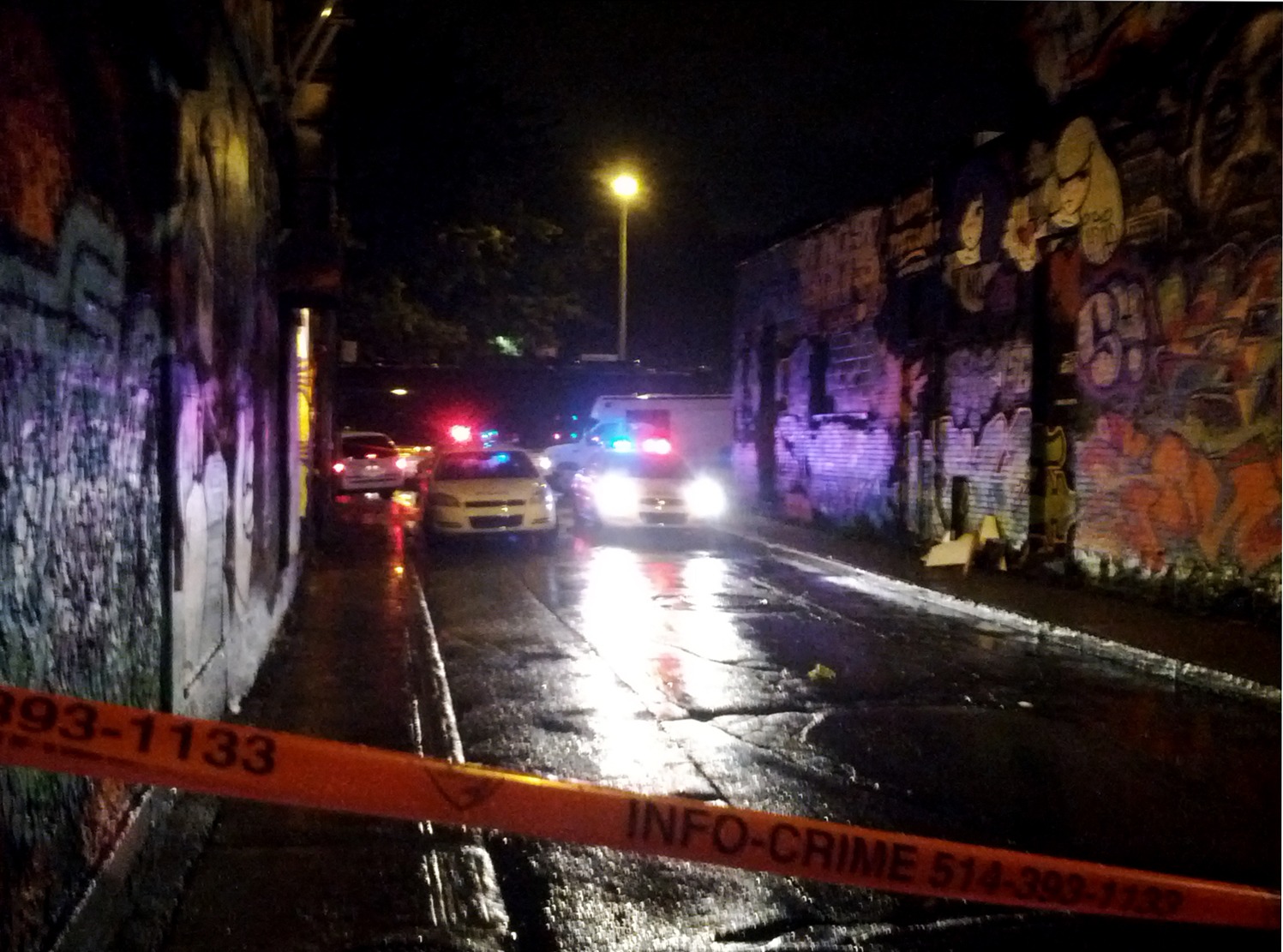
When a journalist learns that a contract has been put on his head, he has two choices: keep quiet or continue. Daniel Renaud chose to continue his investigative work, staying close to the facts, in a field where the truth can come at a high price
“There’s a $100,000 bounty on your head.”
When Daniel Renaud heard those words, he froze. A real contract, approved by a mafia boss with someone ready to carry it out.
For more than fifteen years, Renaud has been investigating organized crime — tracing connections, power dynamics and personal stories that help explain how Quebec’s underworld works.
What keeps him going is curiosity — a need to understand how it all fits together. “I try to break down the structure of organized crime,” he says.
But sometimes, digging too deep can come at a cost.
One day, the police called. A source — who had recently become an informant — revealed that a contract had once been placed on his life, while the informant was on trial.
While the threat was no longer active, the authorities deemed it was important to inform him.
“When I heard that, I took a few seconds to process,” Renaud said.
But even after learning his own life had been threatened, he kept going. For Renaud, journalism isn’t only about truth — it’s also a form of protection.
In a profession where danger is real, rigour becomes a tool for survival.
This interview has been edited for length and clarity.
Josiane N’tchoreret-Mbiamany: As a journalism student, I see how we’re both fascinated and intimidated by the idea of reporting on organized crime. What made you decide to specialize in it?
Daniel Renaud: When I joined Le Journal de Montréal in 2005, my editors hired me to eventually take over from Michel Auger. Michel was a major figure in crime reporting in Quebec — first at La Presse, then at Le Journal de Montréal.
When he retired, around 2008 or 2009, I naturally stepped into the role. Shortly after, there was a lockout at Le Journal de Montréal, and part of the newsroom launched the site RueFrontenac.com.
That’s when the war within the Montreal mafia broke out. In 2009 and 2010, several members of the Rizzuto clan were targeted in shootings, including Nick Rizzuto Jr., who was killed in December 2009.
That’s really when I began to specialize in covering organized crime.
Josiane: What would be the first steps for a student who wants to get into this kind of journalism?
Daniel: There’s no single path — you often end up doing several things at once.
First, you have to be on the ground. Nothing replaces that. Go meet police officers, make first contacts in law enforcement — that’s usually where it starts.
You also need to spend a lot of time at courthouses. Follow trials, listen to testimonies, read the documents filed in court. In Quebec, you can stand up in the courtroom, identify yourself as a journalist and ask for copies of the exhibits. Over time, you build an incredible archive.
It’s by reading hundreds of pages that you start connecting the dots — understanding people, dynamics and backgrounds. And when a suspect gets arrested later, you already know who they are.
Josiane: Sources in this world often have their own interests. How do you verify or disprove what they tell you?
Daniel: I always try to have two, three, sometimes even four or five different sources. When it’s an official source, like a police spokesperson, that can be enough. But even then, you have to stay careful. The police sometimes have an agenda. They can use the media to move an investigation forward — and sometimes, they’ll deliberately distort information to provoke a reaction in the criminal world.
That’s where having sources on the other side, in the criminal world, becomes essential. When the information overlaps, that’s when you know it’s solid. But if I can’t confirm something with at least two or three other sources, I don’t write it.
Josiane: You can’t talk about sources without talking about protecting them — especially in the internet age, where access to information is enormous and everything is connected. I’m curious how you protect your sources.
Daniel: Today, telecommunications are at the centre of everything. A lot of information comes through text messages. So I use several phones — sometimes disposable ones — and different encrypted messaging apps. I also have a few fake email addresses. You have to keep changing how you communicate to make it harder to trace.
Sometimes, I’ll wait several days before publishing a story, just to protect a source. The more time that passes, the harder it is for people to figure out who talked.
I also gather a lot of information around the edges. Police forces collaborate with each other, so sometimes you can confirm a detail through another unit or another service.
“I’d rather get scooped than put a source in danger.”
— Daniel Renaud
Josiane: What advice would you give to a young journalist who wants to get into this kind of reporting?
Daniel: Start by covering general police stories, and always stick to the facts. No interpretations, no shortcuts — just facts.
Then, get out in the field. Be present in courthouses, attend hearings, talk to police officers, ask questions, leave your card. That’s how you build a contact list — an essential tool in this job.
Those relationships evolve over time. A patrol officer can become a detective, then an inspector, and later move into senior positions in public service. That network eventually grows far beyond law enforcement.
In the criminal world, it’s rigour and credibility that open doors. If you stay true to the facts and be patient, the contacts will come.
With files from Chris Arsenault and Josette Lafleur. This interview was edited for length and clarity. This project is supported by the Michener–O’Hagan Fellowship for Journalism Education.