
Unmaking a murderer
Reporting on murder without glorifying the killer Continue Reading Unmaking a murderer

Reporting on murder without glorifying the killer Continue Reading Unmaking a murderer

The uncertainty of memory poses a challenge for narrative journalists Continue Reading The memory puzzle

Comedy and journalism tie the knot – and what it means for all of us Continue Reading A blessed union

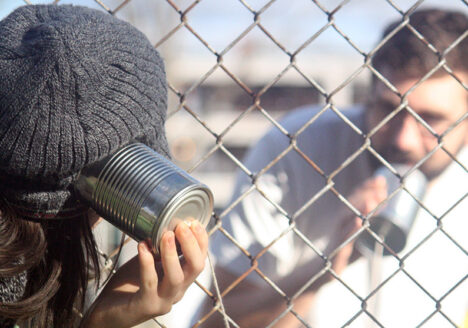
Allison Garber was diagnosed in her early 20s, with obsessive-compulsive disorder and general anxiety disorder. Garber was a university-educated, middle-class woman working a prestigious internship in Toronto. On the inside, though, she felt broken and lost. “I was terrified, I was panicked,” she says. “I didn’t have anyone else to talk to besides my family.…
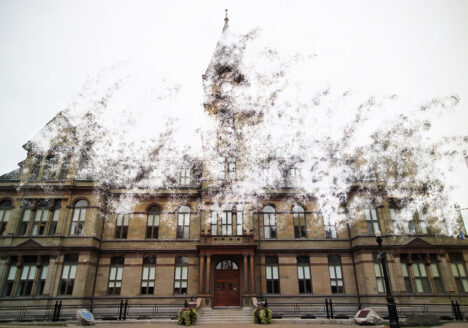
Dale Bass started her 45-year journalism career in 1973 at the London Free Press. She remembers a bustling newsroom of 185, with two or three city hall reporters. Bass would sometimes be sent to the municipal Committee of Adjustments, which dealt with “neighbourhood squabbles”, when city hall reporters were busy with more important work. Bass recently retired…

Patrick FulgenicoPatrick Fulgencio is a journalism student at the University of King’s College, and the photo editor of the Dalhousie Gazette. Despite the discouraging statistics in the article above, he intends to pursue a career in photojournalism after graduation. Some of his work can be found on Instagram: @patrickfulgencio
Julianne Steeves
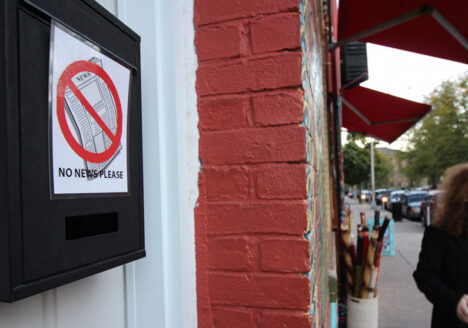
By Francesca Handy for The Signal Midafternoon on a Tuesday, the food court in Scotia Square shopping centre in Halifax is full of people sitting alone. Professionals working in the area are on their lunch breaks. If they aren’t only focused on their food, they’re holding a newspaper or cellphone. Some are looking at news apps or online…
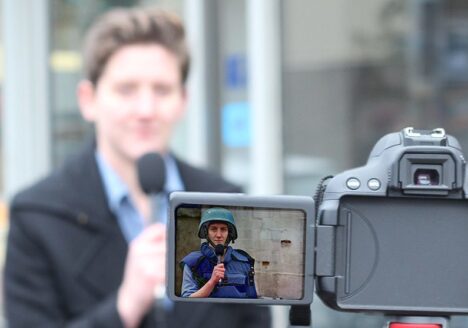
Victoria WaltonVictoria Walton is a journalism student at the University of King’s College in Halifax. She is co-president of the King’s Journalism Society, occasionally writes for student publications, and recently started Vic and Ryan Have a Podcast. Victoria enjoys chai lattes, her pet rabbit Roscoe, and not reading the comments, ever. She will graduate this May…

Delaney MacKayDelaney MacKay is a journalism student at the University of King’s College in Halifax, Nova Scotia. She is co-president of the King’s Journalism Society. She looks forward to working in the fast paced world of digital reporting and television broadcast. In her spare time, you can find her posing her golden doodle for photos,…