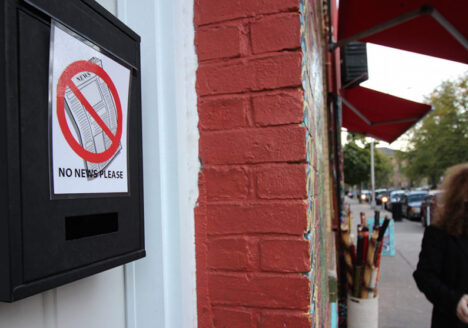
• The last edition of the Lindsay Post. Screenshot courtesy of Policy Options.

    After the local newspaper closes shop

    By Nancy Payne for Policy Options Wally Nugent and Brenda Stonehouse were reviewing the ad they planned to run in the Lindsay Post for Canada Day. They were key organizers of the community’s Canada Day festivities, and the paper was where people looked to find out about local events. But then their phones started pinging…
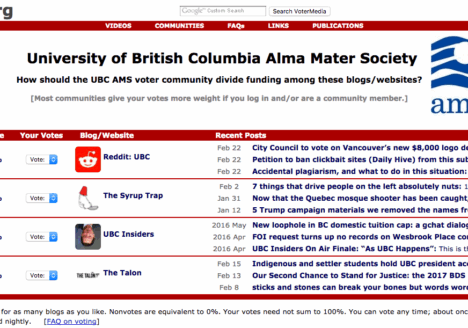
  • Mark Latham has pioneered a voter-funded media project at UBC since 2007. Screenshot by J-Source.

    Why one economist believes letting people vote to fund media could save it

    By Mitchell Thompson Mark Latham says the cure for local media’s ills is voter-funded media—where voters decide which media outlets receive grants. The economist and Votermedia.org founder says the University of British Columbia has been providing grants to media outlets covering the school’s student union and its elections since 2007. It allows voters to rank…
  • The 13 per cent of adults who don’t follow news at all are almost four million people. By Francesca Handy.

    The worrisome 13 per cent

    By Francesca Handy for The Signal Midafternoon on a Tuesday, the food court in Scotia Square shopping centre in Halifax is full of people sitting alone. Professionals working in the area are on their lunch breaks. If they aren’t only focused on their food, they’re holding a newspaper or cellphone. Some are looking at news apps or online…

  • On Feb. 25, protests organized by a coalition of journalism and free speech groups will take place across Canada. Screenshot by J-Source.

    Upcoming Day of Action calls for protections for journalists

    By Grant Buckler A Day of Action set for February 25 will call for an end to mass surveillance, repeal of the Anti-Terrorism Act and new legislation to protect activists, whistleblowers and journalists. The Day of Action was originally to have taken place February 4, but was delayed to avoid conflicts with mass demonstrations against…
  • s.jpg

    CBC Ombudsman: Bias by Omission

    By Esther Enkin, CBC Ombudsman The complainant, Art Toft, thought that merely reporting about the closing down of an activist group’s space because the building was being torn down was unacceptable. He believed it was biased not to mention the political positions taken by Beit Zatoun. He felt the article praised the organization. The politics…
  • unnamed.jpg

    Canadian news consumers unaware of financial strain on the industry

    By Steph Wechsler for the Ryerson Journalism Research Centre Although Canadians value journalism and believe it is essential to a well-functioning democracy, they don’t want to pay for it, concludes a new study that examined the state of Canadian news media. A survey conducted as part of the Public Policy Forum (PPF) report, “The Shattered Mirror,” found…

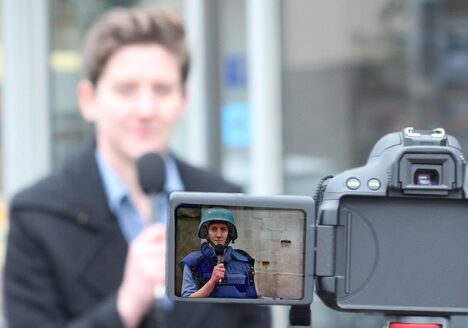
  • War correspondents face a lack of mental health resources. Photo courtesy Victoria Walton.

    Untreated trauma

    By Victoria Walton for The Signal Too few journalists are informed of the mental health impacts they may face on the job. War correspondents have almost all taken hostile environment training, says the Globe and Mail’s Latin American Bureau Chief Stephanie Nolen, who has worked internationally for over two decades. This aims to prevent physical…
  • Image courtesy of Zach Stern (CC BY-NC-ND 2.0.

    Canadian freelancers turn to the US market to secure higher-paying gigs

    By Errol Salamon, Work and Labour Editor When Canadian-based freelancer Katherine O’Brien started working as a web content and blog writer, she hadn’t made a conscious decision to publish with US companies to make a decent living. Yet for over a year and a half, O’Brien has written mostly for companies south of the Canadian…