• Read
    • Labour
    • Business
    • Education
    • Field Notes
    • Law and Ethics
    • Technology
    • Policy
  • Work & learn
    • Journalism Jobs
    • Awards
    • Education Opportunities
    • Events
      • Submit an event
  • Projet J
    • Entrevue
    • Balado
    • Nouvelles
    • International
    • Liberté de presse
    • Archive
  • About Us
    • Editorial Board
    • Supporters
    • Contributor guidelines
Donate
J-Schools Canada
Facts & Frictions
Facebook Twitter X LinkedIn
J-Source
  • Read
    • Labour
    • Business
    • Education
    • Field Notes
    • Law and Ethics
    • Technology
    • Policy
  • Work & learn
    • Journalism Jobs
    • Awards
    • Education Opportunities
    • Events
      • Submit an event
  • Projet J
    • Entrevue
    • Balado
    • Nouvelles
    • International
    • Liberté de presse
    • Archive
  • About Us
    • Editorial Board
    • Supporters
    • Contributor guidelines
Search site...

Category / Work / Ethics

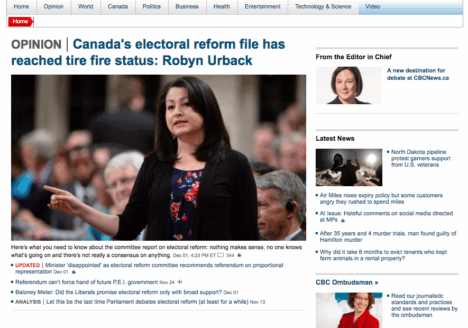
  • The CBC's new opinion landing page. Screenshot by J-Source.

    Furor over CBC’s opinion section is a tempest in an inkpot

    Hard news alone cannot fulfill the CBC’s mandate. Opinions can help do that.

  • 51pe0ivjynl.jpg

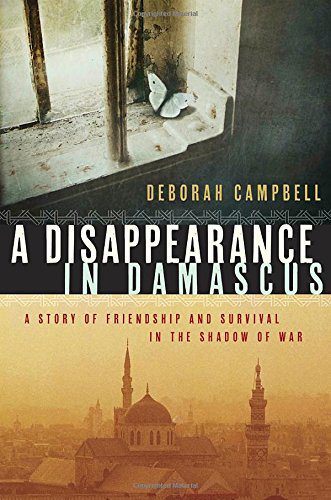
    A Disappearance in Damascus grapples with some of journalism’s toughest ethical questions

    Deborah Campbell, A Disappearance in Damascus: A Story of Friendship and Survival in the Shadow of War. Knopf, 2016. 352 pages. $28.32. By Jane Gerster “Do you think anything you write will make a difference?” A young Iraqi interpreter asks Deborah Campbell this early on in A Disappearance in Damascus: A Story of Friendship and Survival in…
  • Photo courtesy of Michelle-Andrea Girouard.

    Journalism internships should be paid fairly and offer personal mentoring

    By Errol Salamon Entry-level media workers can confirm that some journalism internships aren’t as glamorous as they may seem because they’re neither paid fairly nor do they provide one-on-one mentoring. We gathered the stories of four journalism interns to better understand the experiences of emerging media workers in today’s media landscape. Here’s what they had…
  • Photo courtesy of Andrea Emery.

    Algonquin students offered opportunities but no pay

    By Nicole McCormick Andrea Emery, coordinator of Algonquin College’s graphic design program, was sent into a tailspin when a single email from a national media outlet showed up in her inbox a few weeks back that she would later describe as a landmine. “I was livid when I got it,” she said. The email was…
  • Media stories that get it wrong can contribute to how others perceive those with autism – and even perpetuate potentially dangerous stereotypes. Photo courtesy Becky Wetherington/CC BY 2.0.

    Five things journalists should keep in mind when writing about autism

    By Laurie Mawlam Too often well-meaning journalists get it wrong when they write about autism.  It’s not so much the content of their stories that misses the mark as the language they use to describe autism itself.  It can be easy to unintentionally offend – or worse, misrepresent -- the autism community you are meant…
  • Courtesy David Yu/CC BY-NC-ND 2.0.

    ‘You’re Not the Indian I Had in Mind’

    It’s what I hear all the time from film crews interviewing me. Here’s what I wish they knew beforehand.
  • screen_shot_2016-07-29_at_2.34.46_am.png

    Welcome to Canada: Abdirahman Abdi & the selective silence of Canadian leadership

    By Jared A. Walker Just a few moments ago I watched the Mothers of the Movement give a keynote address at the Democratic National Convention. To say they were compelling would be a gross understatement. These tremendous women inspired millions worldwide with their grace and resilience in the face of unfathomable suffering and monstrous injustice. They are superheroes. As…

  • Photo illustration courtesy of Eric Mark Do.

    We need to talk about The Walrus in the room

    By Romayne Smith Fullerton, Ethics Editor Some journalists make fun of academics. You know: those who can, do, and those who can’t, teach and research. But we also have another function: we watch the watchdogs and critique the critics. And  lately, I have been watching The Walrus, a publication that claims to be a general…

  • Canada's English-language ombuds and public editors. From left: Esther Enkin, ombudsman for the CBC; Patricia Graham, ombudswoman for Brunswick News; Sylvia Stead, public editor for The Globe and Mail; Kathy English, public editor for the Toronto Star. Images courtesy the CBC, Patricia Graham, Sylvia Stead and Kathy English.

    Are Canadian public editors and ombuds independent enough to do their jobs?

    By Jane Gerster In her first column as the Toronto Star’s public editor, Sharon Burnside wryly noted, “Readers will look after the swelled head.” It was March 2005 and she’d held the post all of seven hours, had already written five corrections and was working on two more. The phone had rung: one caller angry…
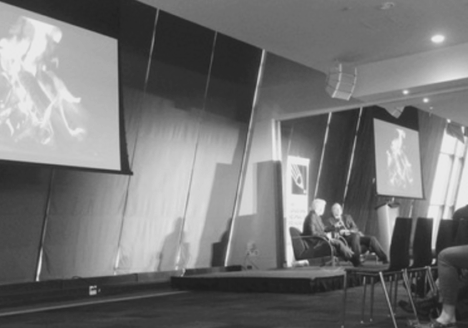
  • Globe and Mail Editor-in-Chief David Walmsley interviews Google’s Richard Gingras during a CJF J-Talk on May 5. Photo courtesy Belinda Alzner.

    Globe and Mail Editor-in-Chief: “Sloppy standards” is where they found issues with Wente

    David Walmsley addresses questions from Canadaland and J-Source during a CJF talk in Toronto on May 5.

Previous
12…45678…2425
Next

Michener Scholarship

J-Source logo

J-Source, led by the journalism programs at Toronto Metropolitan University and Carleton University, is supported by the post-secondary journalism programs at member institutions of J-Schools Canada/Écoles-J Canada, the R. Howard Webster Foundation and a group of donors.

PRIVACY AND J-SOURCE

© Copyright 2024. All Rights Reserved

FacebookTwitter XLinkedIn

This site uses cookies to offer you a better browsing experience. Find out more on how we use cookies and how you can change your settings.