
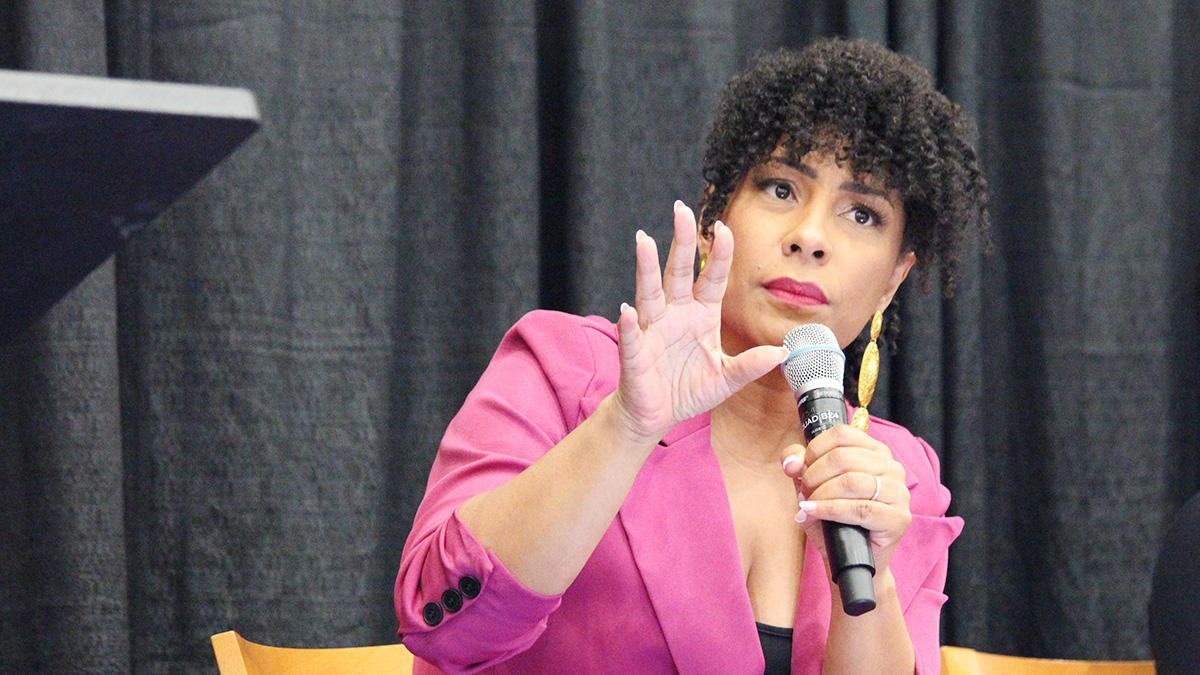
Camille Dundas is working to reshape how people in Canada think about, hear and report on Black stories, a mission that Mary Ann Shadd Cary began more than 150 years ago.
Dundas headlined the first-ever annual Mary Ann Shadd Cary Lecture Series: Voices of Change in Canadian Journalism on Oct. 6.
Carleton University’s School of Journalism and Communication and the Mary Ann Shadd Cary Centre for Journalism and Belonging — founded by award-winning journalist and professor Nana aba Duncan — said the lecture honours the legacy of Shadd Cary, the first Black woman publisher in North America and the first woman publisher in Canada.
“I would never imagine my name would be in the same sentence as Mary Ann Shadd Cary,” Dundas said.
Dundas and her husband, Roger Dundas, co-founded ByBlacks.com, the only Black-focused national online magazine and space reserved for uplifting Black people in Canada.
“We remain committed to not just writing stories about people, but to write stories for people and with people,” Dundas said. To do this, Dundas said she had to unlearn many of the rules she was taught in journalism school.
“News media has historically been weaponized against Black communities to reduce us to mug shots and caricatures and we have to do the work to dismantle those kinds of biases through each story we tell,” she said.
Dundas spoke of her recent project, a three-part series called When Black Boys Go Missing, which focuses on the ongoing grooming of Black boys in Toronto and its surrounding suburbs into drug crime. For this piece, Dundas said she allowed a source to read the story before it was published, a choice that challenges legacy media norms.
“I made a choice that many of my colleagues in corporate media are not able to make. Instead of exerting power, I shared it,” Dundas said.
.
Dundas said she hopes the Mary Ann Shadd Cary Centre will create space for Black journalists to question traditional media norms and discuss the unique challenges they face in telling their communities’ stories.
Shadd Cary was a pioneering Black journalist, abolitionist and educator who founded The Provincial Freeman in 1853, an anti-slavery newspaper that advocated for civil rights and encouraged Black settlement and education in Canada.
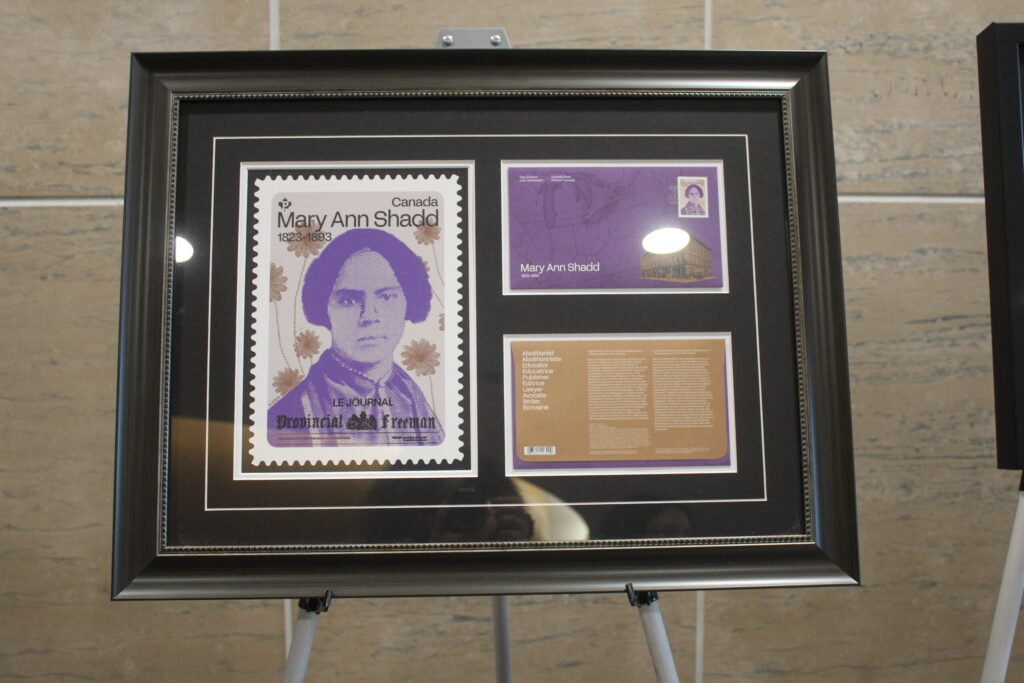
Shadd Cary often left her name off the newspaper to ensure her message remained the main focus at a time when women’s voices, especially Black women’s voices, were rarely welcomed in public discourse.
“It’s important for me to realize that Mary Ann Shadd Cary could not put her name on her publication,” Dundas said. “I own my name.”
And that is a powerful statement on its own.
“I cannot separate my Blackness from my womaness, my womaness from my Blackness, or both of those things from my work as a journalist,” she said.
Dundas’s work continues the legacy of Shadd Cary by ensuring that Black stories are told with nuance, care and authority.
Shannon Prince, Shadd Cary’s sixth-generation descendant and former curator of the Buxton National Historic Site and Museum in Ontario, described her ancestor as a mover and shaker before her time.
Shadd Cary “provided a platform for those marginalized voices, Black women, to use their voice to make change and to empower themselves and others,” Prince said.
In a time when Black women’s voices weren’t being heard, Shadd Cary set a precedent for using writing as a means of empowerment and resistance.
To Prince, Shadd Cary’s greatest accomplishment, aside from her publishing business, was organizing the Coloured Women’s Progressive Franchise Association, which enabled women to invest their money and become financially independent from men.
Shadd Cary’s work also inspired her great-great-grandniece, Adrienne Shadd, to become a historian, author and researcher of Black Canadian history.
“I just felt that if there are all these great people in my family, who else is out there that needs to be discovered and explored and learned about?” Shadd said.
Through The Provincial Freeman, Shadd Cary showcased Black women and provided a voice to the Black community.
“Oddly enough, 170 years later, (Black people) are still trying to say, ‘Hey, we’re like everybody else.’ We love, we have accomplishments,” Shadd said. “We’re just trying to gain our little piece of what we can in society, just like everybody else.”
Shadd said her great-great aunt was trying to show Black people as agents of change.
In her lecture, Dundas said one of the challenges she faced while in legacy media was the practice of going into marginalized communities and extracting information without giving anything meaningful in return.
“We have had a couple of partnerships with big media that have not really gone that well because it is difficult to change the mindset of this extractive model,” Dundas said.
Through ByBlacks.com, Dundas said she tells stories with people rather than about them, giving Black communities agency over how they are being represented.
Dundas said the Black community is in a time of resistance due to the hand of oppression, fascism and what she calls instances of media censorship from mainstream institutions that often silence or distort Black voices.
“We must never rest in our naivety or in our hope that everything will balance out one day. We must resist,” she said. “And if you cannot resist, at least don’t get in the way of those who will.”