
Timothy Caulfield on pushing back against the forces fueling our current information chaos
Timothy Caulfield
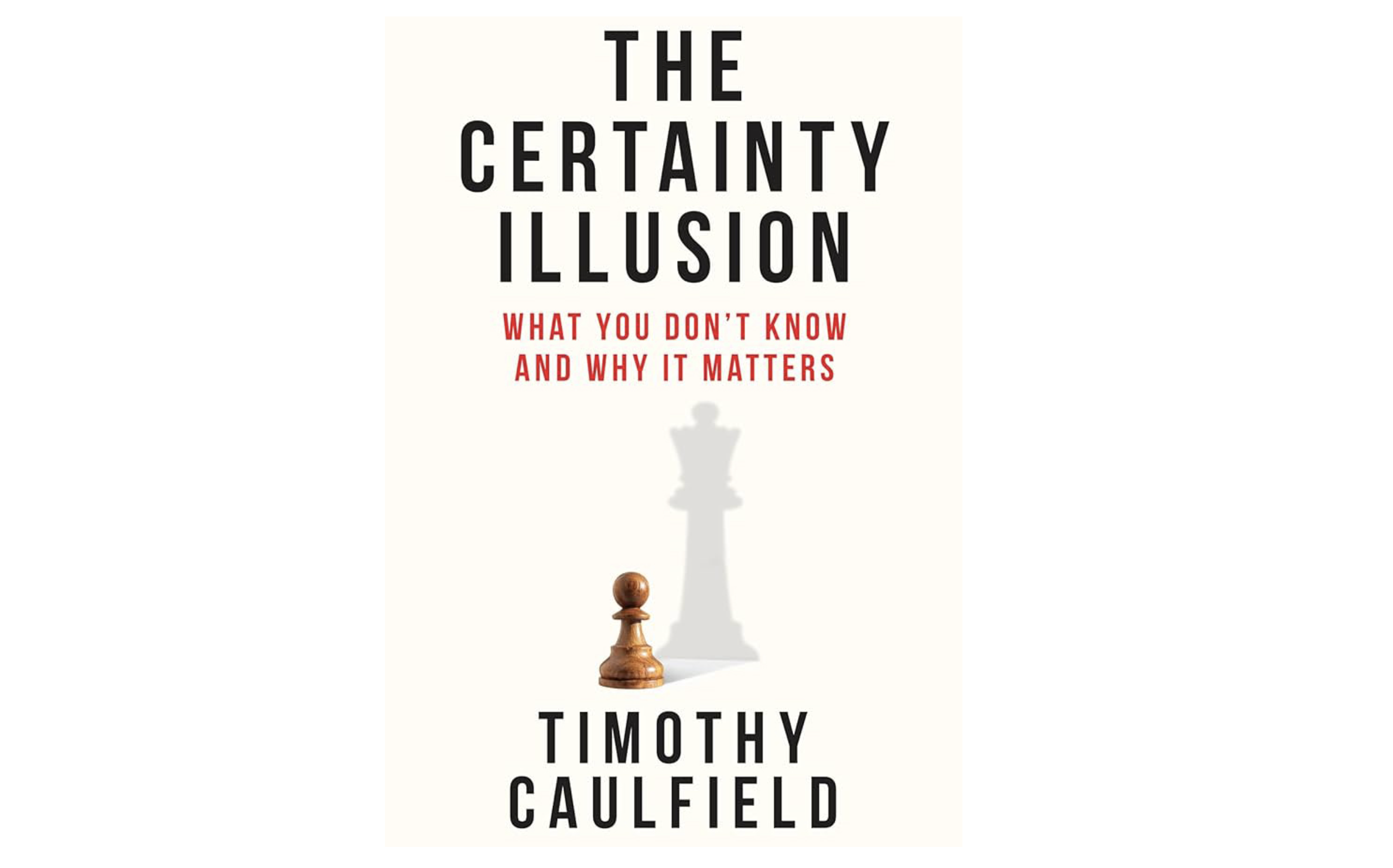
Penguin Random House Canada, 2025
(312 pp.) paperback, hard cover, e-book, audio book
If Timothy Caulfield weren’t a legal scholar and an internationally renowned crusader against junk science and online misinformation and disinformation, he could be a journalist.
His latest book, The Certainty Illusion: What You Don’t Know and Why it Matters, offers a “how-to manual” for reporters to live up to that old journalism axiom: “If your mother says she loves you, check it out!”
Caulfield’s fifth book, which explores how hype, manipulation, and deception distort our understanding of science and health, prescribes a healthy dose of skepticism and critical thinking to navigate our current “information disorder” (Wardle, 2020, para. 1).
In an age of information abundance, Caulfield, a University of Alberta law professor and former Canada Research Chair in Health Law and Policy, concedes it is, indeed, getting harder to sort fact from fiction. Caulfield admits that even after decades of analyzing and critiquing biomedical and health research, he, too, is “finding it more difficult to separate good stuff from the marginal and the full-on manure” (Caulfield, 2025, p. 232).
In an interview last year, Caulfield called the spread of misinformation and disinformation “one of the greatest challenges of our times” (DeCillia, 2024, 0:44).
His new book exposes the forces contributing to what some have dubbed the “age of information disorder” (Wardle, 2025, para 1). It offers valuable tips for pushing back on the bad actors peddling misinformation and disinformation.
The Certainty Illusion warns about three fallacies that perpetuate fake news and misinformation.
Read the full book review in the Spring issue of Facts and Frictions
Facts and Frictions is published by J-Schools Canada, Canada’s national association for post-secondary journalism research and education. All content is open access and available via J-Source.