
Global’s Patrick Cain on FOIs, legal fights and data journalism
It took six years and three court decisions. But earlier this year, Patrick Cain received information from the provincial government about where registered sex offenders live.

It took six years and three court decisions. But earlier this year, Patrick Cain received information from the provincial government about where registered sex offenders live.

The victim’s name evoked a country-wide push to improve police response to sexual assault. But the media couldn’t report her name because of a publication ban.

Chief Justice Joseph Kennedy of the Nova Scotia Supreme Court allowed reporters use Twitter during a sexual assault trial and says he “couldn’t get over how well it had worked.”

With a provincial election underway in Ontario and 4 federal by-elections slated for the end of June the timing of the announcement by Canada’s national broadcasters that they will not allow unauthorized use of their content in political ads is auspicious. But as Law Editor Thomas Rose writes, making the ban stick may prove harder…

While cameras have been allowed in Appeal Court and in certain cases in other provinces, this is thought to be the first time a province has designated courtrooms where proceedings can be broadcast automatically. All matters before the Manitoba Court of Appeal can also be broadcast unless a strong case is made against it.
In new B.C. Supreme Court documents, John Furlong, the CEO of the Vancouver 2010 Winter Olympics admits he has no proof that a journalist made an abuse complaint about him to the RCMP.
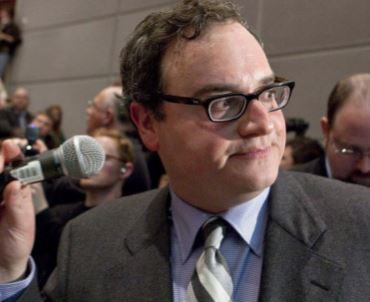
A Saskatchewan lawyer is alleging Sun News Network host Ezra Levant defamed him in a series of blog posts and is seeking $100,000 in damages.

Should journalists be worried about police tactics that force them to gather information on innocent citizens, violating their privacy and infringing on the right of individuals to freedom of expression? J-Source Law Editor Thomas Rose explores whether so-called production orders are doing just that.

The RCMP have obtained a court order compelling five media outlets—the CBC, Global, APTN, Brunswick News and Rogers—to turn over footage and photos of the Oct. 17 riots in Rexton, NB.

York University had given a libel notice to Toronto Life and Katherine Laidlaw, the writer of an article alleging that its campus has become a “hunting ground for sexual predators” in the October 2013 issue. The university has since withdrawn its legal action, and Toronto Life has issued a clarification.