
• Read
    • Labour
    • Business
    • Education
    • Field Notes
    • Law and Ethics
    • Technology
    • Policy
  • Work & learn
    • Journalism Jobs
    • Awards
    • Education Opportunities
    • Events
      • Submit an event
  • Projet J
    • Entrevue
    • Balado
    • Nouvelles
    • International
    • Liberté de presse
    • Archive
  • About Us
    • Editorial Board
    • Supporters
    • Contributor guidelines
Donate
J-Schools Canada
Facts & Frictions
Bluesky LinkedIn
J-Source
  • Read
    • Labour
    • Business
    • Education
    • Field Notes
    • Law and Ethics
    • Technology
    • Policy
  • Work & learn
    • Journalism Jobs
    • Awards
    • Education Opportunities
    • Events
      • Submit an event
  • Projet J
    • Entrevue
    • Balado
    • Nouvelles
    • International
    • Liberté de presse
    • Archive
  • About Us
    • Editorial Board
    • Supporters
    • Contributor guidelines
Search site...

Category / Read

  • Students at work in a journalism classroom. Photo by Gary Gould, X University

    Technology and Journalism:  The Experience of Recent Graduates from Two Canadian Journalism Schools

    How should tech fit into journalism education? Are j-schools finding the right balance? Aneurin Bosley and Fred Vallance-Jones asked recent grads, in the latest issue of Facts and Frictions Continue Reading Technology and Journalism:  The Experience of Recent Graduates from Two Canadian Journalism Schools

  • Room Up Front logo

    Room up Front accepting applications for mentorship program for early-career BIPOC photojournalists

    Due April 15 Continue Reading Room up Front accepting applications for mentorship program for early-career BIPOC photojournalists

  • A selection of newspapers owned by Groupe Capitales Medias (GCM) are pictured in Montreal on August 19, 2019

    Forming a co-op saved six Canadian newspapers from closing. Here’s how they do business now

    ‘Being so close to bankruptcy made people realize that what we were offering them was a treasure, but it was pretty fragile’ Continue Reading Forming a co-op saved six Canadian newspapers from closing. Here’s how they do business now

  • cbc.jpg

    CBC ombudsperson: Opinions on Islamophobia

    ‘Context and insight comes in many different forms. Sometimes it emerges from deep research into a subject. Sometimes it comes from the experience of a reporter who’s covered an issue for many years. And sometimes it comes from a journalist’s own life experience’ Continue Reading CBC ombudsperson: Opinions on Islamophobia

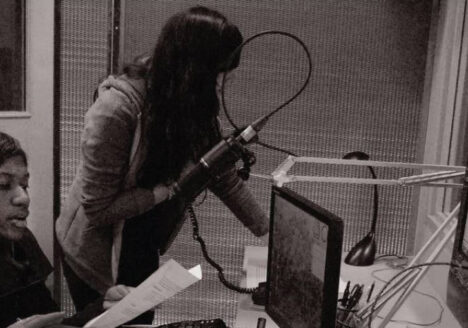
  • Students learning radio journalism

    Facts & Frictions Spring 2022

    Technology and journalism education, climate disinformation, innovations in audio storytelling and more explored in new journal issue Continue Reading Facts & Frictions Spring 2022

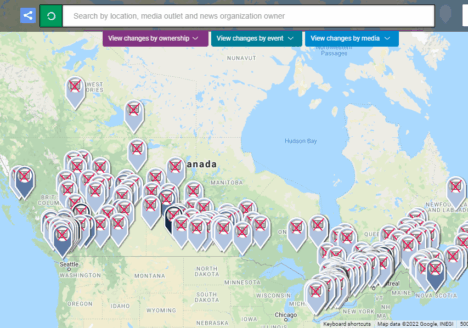
  • Closed newspaper markers on the Local News Map.

    Discordant or just different? A comparison of community newspaper data in Canada

    What the local news map and an industry group snapshot show — and what they don’t — about the state of community journalism Continue Reading Discordant or just different? A comparison of community newspaper data in Canada

  • Metroland print plant closure a blow, says union

    Eighteen unionized workers losing their jobs when Hamilton Web presses shut down for good April 1 Continue Reading Metroland print plant closure a blow, says union

  • The trucker convoy provides a case study in online threats and IRL harms

    Journalists’ experiences of online threats during the blockade offer insights into how virtual abuse spills offline and how newsrooms should be planning ahead Continue Reading The trucker convoy provides a case study in online threats and IRL harms

  • Fraser Valley Current homepage

    Reflections on a year of the Fraser Valley Current

    Starting a new enterprise is always a gamble. It’s a bet on yourself, on those who will help you, and on your audience. Managing editor Tyler Olsen breaks down what The Current’s learned after Year One Continue Reading Reflections on a year of the Fraser Valley Current

  • Online violence is ‘death by a thousand cuts,’ especially for women, LGBTQ2+ and racialized journalists, and COVID-19 has increased the toxicity. How can Canadian newsrooms better respond? 

    Journalists have to put in countless unpaid hours to manage the disproportionate burden of existing online. While the pandemic has intensified the issue, newsroom and platform responses are still playing catch-up
    Continue Reading Online violence is ‘death by a thousand cuts,’ especially for women, LGBTQ2+ and racialized journalists, and COVID-19 has increased the toxicity. How can Canadian newsrooms better respond? 

Previous
12…1718192021…936937
Next
  • Academic news partnerships in local journalism: A literature review
    How post-secondary newsrooms can contribute to local in…
  • Academics should engage the public without replacing journalism
    Researchers are increasingly pushed into public debate…
Support J-SourceJ-Source Newsletter Signup. Click to go to subscription page

J-Schools Canada

Upcoming Events

Notice
There are no upcoming events.
J-Source logo

J-Source, led by the journalism programs at Toronto Metropolitan University and Carleton University, is supported by the post-secondary journalism programs at member institutions of J-Schools Canada/Écoles-J Canada and a group of donors.

PRIVACY AND J-SOURCE

© Copyright 2026. All Rights Reserved

BlueskyLinkedIn

SUBSCRIBE TO THE J-SOURCE NEWSLETTER

* indicates required

This site uses cookies to offer you a better browsing experience. Find out more on how we use cookies and how you can change your settings.